MSD FLEXI-WAGE SUBSIDY

Aimee Pivott

Understanding the MSD Flexi-Wage Subsidy in New Zealand


Supporting people into sustainable employment is a core focus of New Zealand’s Ministry of Social Development (MSD). One of the key initiatives designed to bridge the gap between job seekers and employers is the Flexi-Wage Subsidy. This programme plays an important role in helping individuals who face barriers to employment while also supporting businesses to take on new staff with reduced financial risk.


What is the Flexi-Wage Subsidy?


The MSD Flexi-Wage Subsidy is a financial support initiative that helps employers hire job seekers who may need additional support to enter or re-enter the workforce. Rather than a one-size-fits-all approach, it is flexible and tailored to the needs of both the employer and the employee.


The subsidy is paid directly to employers to offset wage costs for a set period, making it easier to bring on workers who might otherwise struggle to secure employment.


Who is Eligible?


Eligibility is typically focused on individuals who:


  • Are receiving a benefit or have a low income (this could even be someone who is currently on your payroll as a casual employee).
  • Have been out of work for a period of time.
  • Face barriers such as limited work experience, health conditions, or caregiving responsibilities.
  • Need extra support to transition into stable employment.


Employers must be willing to provide a genuine job opportunity and work alongside MSD to support the employee’s development.


How Does It Work?


The Flexi-Wage Subsidy is negotiated on a case-by-case basis, which makes it particularly adaptable. Key features include:


  • Subsidy duration: Usually short- to medium-term (often weeks to months depending on circumstances).
  • Payment structure: MSD contributes to the employee’s wages, reducing the employer’s cost.
  • Support plan: MSD may also provide tools, training, or wraparound support to help the employee succeed.


Unlike standard wage subsidies, this programme is built to evolve as the employee becomes more independent and confident in their role.


Benefits for Employers


For businesses, the Flexi-Wage Subsidy offers several advantages:


1. Reduced Hiring Risk - Employers receive financial assistance, lowering the upfront cost of hiring and training new staff.

2. Access to a Wider Talent Pool - It opens opportunities to candidates who may not have traditional experience but possess strong potential.

3. Support from MSD - Employers often receive ongoing guidance and support, helping ensure a successful employment outcome.

4. Positive Social Impact - Participating businesses contribute to reducing unemployment and strengthening communities.


Benefits for Job Seekers


For individuals, the programme can be life-changing:


1. A Pathway into Employment - It provides a stepping stone into the workforce, especially for those who have struggled to find work.

2. Skill Development - Employees gain real-world experience, build confidence, and develop skills that improve long-term employability.

3. Financial Independence - Securing work reduces reliance on benefits and supports a more stable financial future.

4. Ongoing Support - MSD can offer continued support during the transition, addressing challenges early.


Real-World Impact


The Flexi-Wage Subsidy has helped many people across New Zealand transition from unemployment into meaningful work. Employers have successfully integrated workers into their teams who might otherwise have been overlooked, and employees have gone on to sustain long-term careers.


The flexibility of the programme is one of its biggest strengths—it allows solutions to be tailored to individual needs rather than applying rigid rules.


How to Get Started


If you're interested in the programme:


  • Employers can contact MSD or Work and Income to discuss hiring needs and potential support options.
  • Job seekers can speak with their case manager to explore whether Flexi-Wage could help them into work.


Final Thoughts


The MSD Flexi-Wage Subsidy is more than just a financial incentive—it is a collaborative approach to employment that benefits individuals, businesses, and communities alike. By removing barriers and encouraging inclusive hiring, it creates opportunities where they might not otherwise exist.


Whether you're an employer looking to expand your team or someone seeking a fresh start in the workforce, the Flexi-Wage Subsidy is a programme worth exploring.

https://www.workandincome.govt.nz/employers/subsidies-training-and-other-help/flexi-wage.html

Governance isn’t corporate red tape — and it’s not just for big companies.
For SMEs, governance is s
By Amber Rowsell May 4, 2026
Governance isn’t corporate red tape — and it’s not just for big companies. For SMEs, governance is simply how decisions are made, monitored, and held accountable as the business grows. It’s not just compliance. Even the Institute of Directors in New Zealand makes it clear governance is about strategic oversight and lon
Now’s a great time to get started on our end of year questionnaires — before the months fly by and t
By Aimee Pivott April 23, 2026
Now’s a great time to get started on our end of year questionnaires — before the months fly by and the job takes four times as long!
If you or someone you know has a promising business idea but limited financial resources, you may qu
By Aimee Pivott April 19, 2026
If you or someone you know has a promising business idea but limited financial resources, you may qualify for WINZ support benefits created to assist New Zealanders in launching and developing their businesses. Starting or growing a business in New Zealand can be exciting — but it can also be financially tough, especia
Stocktakes aren’t just a tick‑box task — they’re essential for protecting your financials.
By Aimee Pivott March 31, 2026
Stocktakes aren’t just a tick‑box task — they’re essential for protecting your financials.
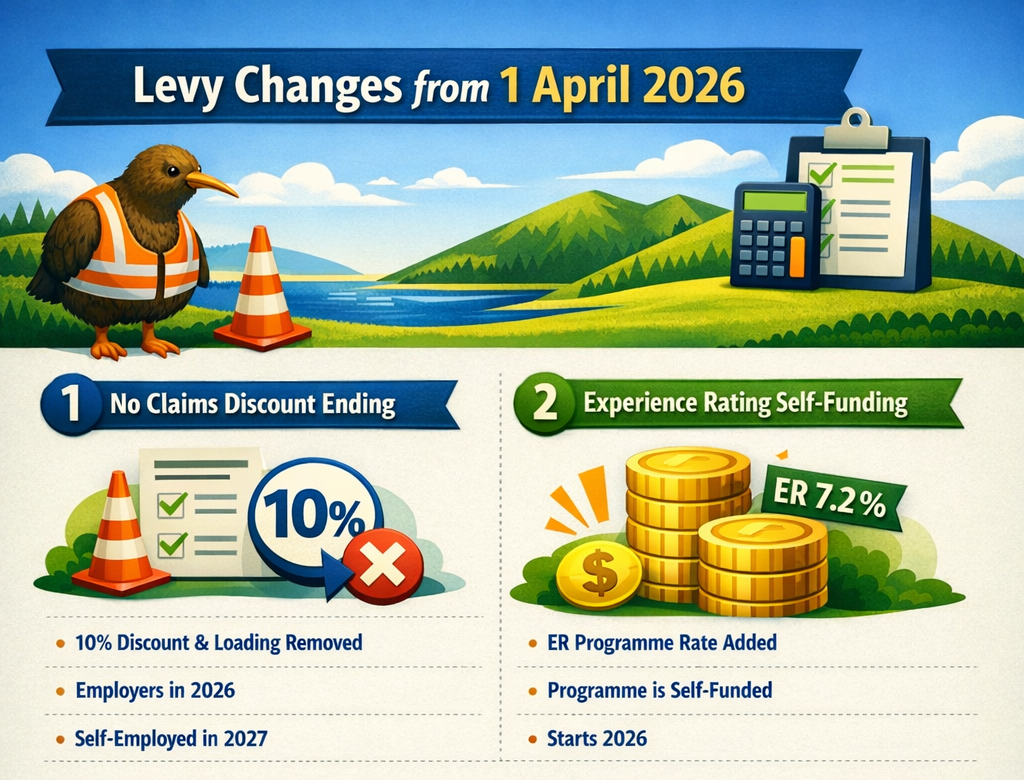
1. No Claims Discount is ending 

The No Claims Discount will be discontinued because it hasn’t ac
By Aimee Pivott March 9, 2026
1. No Claims Discount is ending The No Claims Discount will be discontinued because it hasn’t achieved the intended health and safety improvements and has required subsidising from other businesses. What’s changing: Levy invoices will no longer include a 10% discount or a 10% loading based on claims history
As the financial year wraps up, it’s a good time to check in on KiwiSaver, especially with several i
By Amber Bates March 3, 2026
As the financial year wraps up, it’s a good time to check in on KiwiSaver, especially with several important changes coming over the next few years. Some affect how much you contribute, while others change what the Government puts in.
Depreciation might sound like an accounting buzzword — but it plays a HUGE role in your financial
By Aimee Pivott February 25, 2026
Depreciation might sound like an accounting buzzword — but it plays a HUGE role in your financial
Starting a new financial year is a great chance to get on top of your cashflow and make sure the bus
By Jeff Rowsell February 17, 2026
Starting a new financial year is a great chance to get on top of your cashflow and make sure the bus
By Aimee Pivott November 18, 2025
Common Accounting Mistakes and How to Avoid Them Accounting is the backbone of any successful business. Accurate financial records help you make informed decisions, stay compliant with tax laws, and maintain healthy cash flow. Yet, many businesses—especially small ones—fall into common accounting traps that can lead to costly errors. In this post, we’ll explore the most frequent mistakes and practical steps to avoid them. 1. Mixing Personal and Business Finances The mistake: Using the same bank account for personal and business transactions. Why it matters: It makes tracking expenses and profits difficult, complicates tax filings, and can raise compliance issues. How to avoid: Open a dedicated business bank account. Use accounting software to separate and categorize transactions. 2. Ignoring Cash Flow The mistake: Focusing only on profit without monitoring cash flow. Why it matters: A business can be profitable on paper but still run out of cash, leading to missed payments or insolvency. How to avoid: Regularly review cash flow statements. Forecast future cash needs to prepare for slow periods. 3. Misclassifying Expenses The mistake: Incorrectly categorizing expenses or failing to distinguish between capital and operational costs. Why it matters: Misclassification can distort financial reports and lead to tax issues. How to avoid: Learn the basics of expense categories. When in doubt, consult an accountant or use software with built-in guidance. 4. Not Reconciling Accounts The mistake: Skipping monthly reconciliations for bank and credit accounts. Why it matters: Errors and fraud can go unnoticed, resulting in inaccurate balances. How to avoid: Schedule monthly reconciliations. Use automated tools to match transactions quickly. 5. Forgetting About Tax Deadlines The mistake: Missing filing dates or underestimating tax obligations. Why it matters: Late filings lead to penalties, interest, and unnecessary stress. How to avoid: Set calendar reminders for tax deadlines. Use accounting software with tax compliance features. 6. Overlooking Depreciation The mistake: Not accounting for depreciation on assets. Why it matters: Inflates profits and misstates asset values, which can affect tax and investment decisions. How to avoid: Apply the correct depreciation method for each asset. Update records regularly to reflect changes. 7. DIY Accounting Without Expertise The mistake: Trying to manage complex accounting tasks without professional help. Why it matters: Small mistakes can snowball into major financial problems. How to avoid: Invest in reliable accounting software. Hire a qualified accountant for reviews or ongoing support. Final Thoughts Accounting mistakes are common, but they’re avoidable with the right systems and habits. By separating finances, monitoring cash flow, and seeking expert advice when needed, you’ll keep your business financially healthy and compliant.  Tip: If you’re feeling overwhelmed, consider outsourcing your accounting or using cloud-based tools that simplify the process.
By Jeff Rowsell October 15, 2025
Starting or running a business without a plan is like heading out on a road trip with no map—you might get somewhere, but probably not where you wanted to go. A good business plan helps you figure out where you're going, how you’ll get there, and what you’ll need along the way. It’s not just about writing things down. Planning helps you get clear on your goals, your customers, and how you’ll make money. It’s a chance to think through your ideas, spot any gaps, and make smarter decisions. Having a plan also keeps you on track. When things get busy or unexpected stuff pops up (which it always does), your plan helps you stay focused and avoid getting sidetracked. It’s like having a compass when things get messy. Money-wise, planning helps you understand your costs, forecast your income, and avoid nasty surprises. It’s also super useful if you’re looking for funding—investors and banks love a solid plan. And if you’ve got a team, a business plan helps everyone stay on the same page. When people know what the goals are and how they fit in, they work better together.  Bottom line? You don’t need a fancy document. Just take the time to think things through, write it down, and keep it updated. It’ll make a big difference.
More Posts